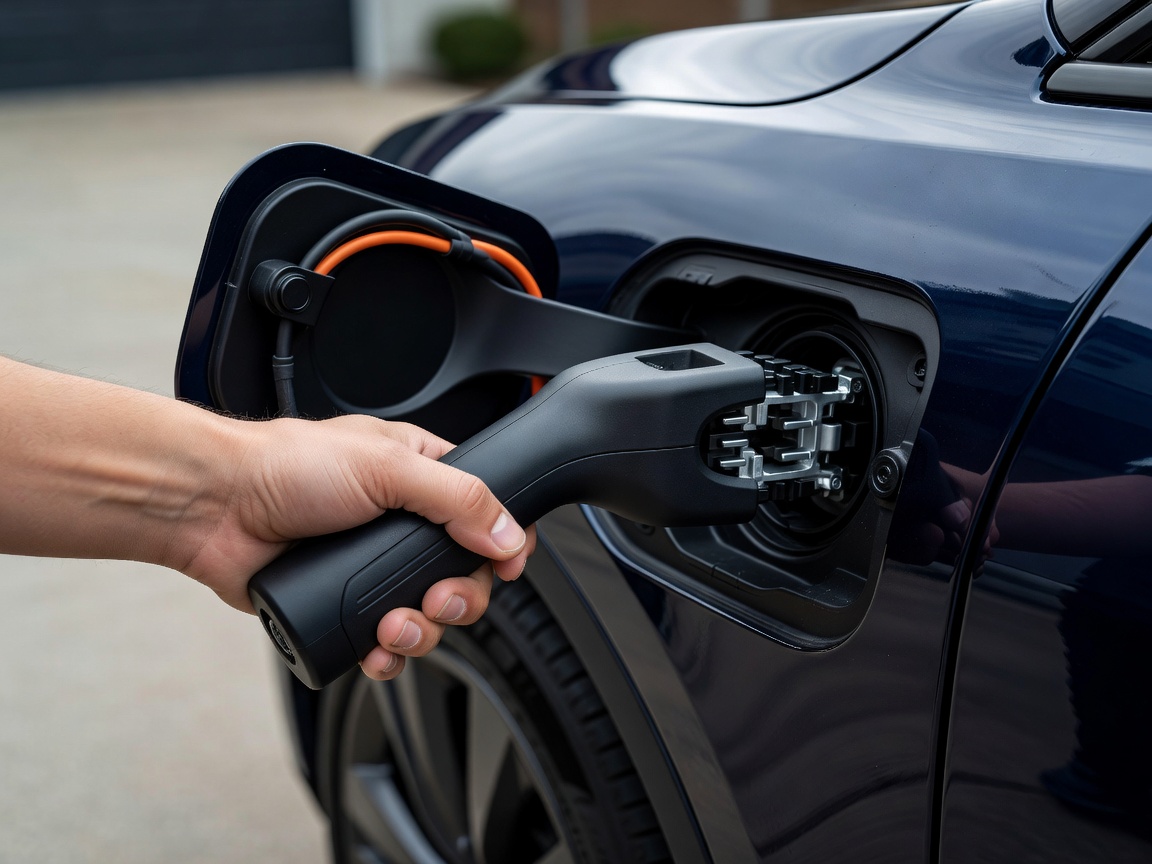
Level 1 vs. Level 2 Charging
Transitioning to an electric vehicle requires a paradigm shift in how you view "refueling." Instead of visiting a station weekly, your home garage becomes your primary fuel source. Understanding the difference between Level 1 and Level 2 charging is paramount to a successful EV ownership experience.
Level 1 Charging utilizes a standard 120-volt household outlet. The charging equipment for this is often included with the vehicle. It is convenient because it requires zero installation, but it is incredibly slow. Level 1 adds roughly 3 to 5 miles of range per hour of charging. For plug-in hybrids or drivers with incredibly short commutes, this might suffice. For a fully electric vehicle with a large battery pack, a full charge from zero can take over 40 hours.
Level 2 Charging operates on a 240-volt circuit, similar to what a heavy-duty electric clothes dryer uses. Depending on the amperage, a Level 2 station adds 15 to 40 miles of range per hour, comfortably recharging a completely depleted EV battery overnight. For the vast majority of EV owners, installing a Level 2 station is highly recommended.
Hardwired vs. NEMA 14-50 Plug
When selecting a Level 2 unit, you face a choice between a hardwired installation and a plug-in model using a NEMA 14-50 receptacle.
- Plug-in (NEMA 14-50): This requires an electrician to install a heavy-duty 240V outlet. You then mount the charger and simply plug it in. The major benefit is portability; if the charger fails or you move houses, you can unplug it and take it with you without needing an electrician to disconnect it. However, electrical codes often limit plug-in EV chargers to 40 amps of output.
- Hardwired: The charger is directly wired into your home's electrical panel. This setup allows for higher charging speeds—up to 48 amps or more—making it the best choice for EVs with massive battery packs (like large electric trucks). Hardwiring is also often viewed as a more robust weather-proof connection if installing the unit outdoors.
Tethered vs. Untethered Cables
In North America, almost all home EV chargers are "tethered," meaning the cable is permanently attached to the wall unit. You simply pull the handle and plug it into your car. In other regions, "untethered" units are popular. These are essentially just a socket on the wall; you must provide your own cable to connect the car to the charger. While tethered is undeniably more convenient for daily use, untethered offers flexibility if you change vehicles to one with a different port standard.
Smart Features: Wi-Fi and Load Balancing
Basic "dumb" chargers just push electricity when plugged in. "Smart" chargers connect to your home Wi-Fi network and offer a companion smartphone app. The most valuable feature of a smart charger is scheduling. Many utility companies offer time-of-use tariffs, meaning electricity is significantly cheaper between midnight and 6 AM. A smart charger allows you to plug the car in at 6 PM, but delay pulling power from the grid until the cheap window begins.
Additionally, advanced setups offer dynamic load balancing. If your home's total electrical capacity is limited, the charger can monitor house-wide energy usage. If you turn on an electric oven or AC unit, the charger automatically dials down the power to the car to prevent tripping the main breaker, then ramps back up when the other appliances turn off.