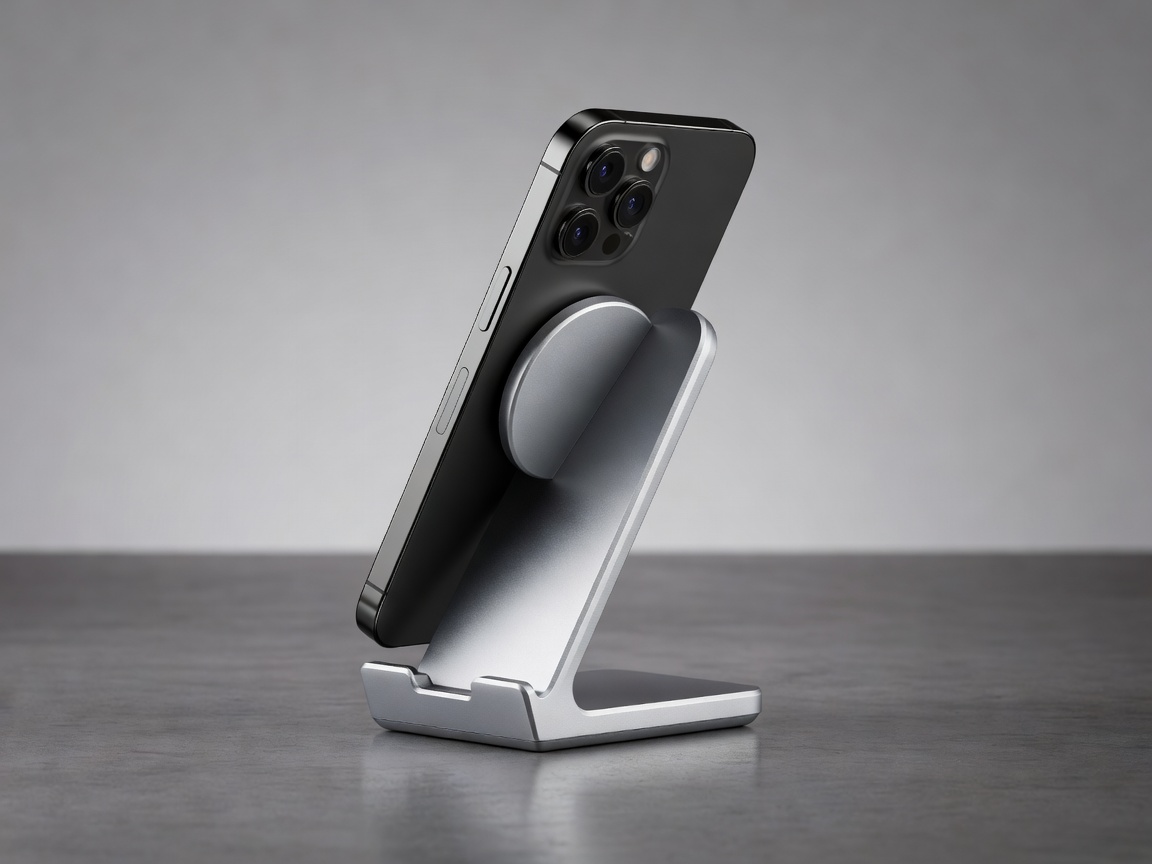
How Wireless Charging Actually Works
Despite the name, wireless chargers still require a wire running to a wall outlet. The "wireless" aspect refers exclusively to the connection between the charging pad and your device. The technology relies on electromagnetic induction. A copper coil inside the charging pad has an alternating current passed through it, creating an oscillating magnetic field. When a device with a matching receiver coil is placed nearby, this magnetic field induces a current in the device's coil, charging the battery.
While incredibly convenient for simply dropping your phone onto a nightstand, the process is fundamentally less efficient than a direct cable connection. Energy is lost in the transfer, predominantly manifesting as heat.
The Importance of Alignment and MagSafe
Because the induction coils in the phone and the pad are relatively small, alignment is critical. If the phone is off-center by even a few millimeters, efficiency drops drastically. The pad works harder to push power across the gap, generating excess heat that can throttle charging speeds or degrade the phone's battery over time.
Magnetic alignment systems, popularized by modern smartphone ecosystems, solve this problem beautifully. By surrounding the induction coil with a ring of magnets, the device snaps perfectly onto the charger's "sweet spot" every time. This guarantees maximum efficiency, lower heat generation, and enables vertical mounting on dashboard stands or desk mounts without clips or grips.
Understanding the Qi Standards
The Wireless Power Consortium (WPC) governs the Qi standard, the universal language of wireless charging. If a charger is Qi-certified, it has passed rigorous safety and interoperability tests.
- Qi BPP (Baseline Power Profile): The standard 5W charge. Slow, but sufficient for overnight charging.
- Qi EPP (Extended Power Profile): Allows up to 15W of power transfer. This is currently the standard for most fast wireless charging pads.
- Qi2 Standard: The newest iteration incorporates magnetic alignment technology directly into the universal standard, ensuring that devices across different operating ecosystems can benefit from perfectly aligned, efficient 15W charging.
Form Factors: Pads vs. Stands vs. Multi-Device
Choosing the right form factor depends on where you intend to use the charger.
Pads: Flat pads are discreet and ideal for living rooms or entryways where you might quickly drop down a phone or a pair of wireless earbuds. However, they render the phone's screen difficult to read while charging.
Stands: Stands prop the device up at an angle. These are perfect for office desks, allowing you to easily view notifications, participate in video calls, or use facial recognition to unlock your device without removing it from the charger.
Multi-Device Stations: Often combining a phone stand, an earbud pad, and a smartwatch puck into a single tree-like structure. These dramatically clean up cable clutter on a bedside table but require robust wall adapters (usually 30W+) to power all three induction coils simultaneously.
Heat Management and Battery Health
Heat is the enemy of lithium-ion batteries. Due to the inherent inefficiency of induction, wireless chargers run hotter than cables. Premium wireless chargers mitigate this by using aluminum chassis as heatsinks, or even incorporating silent, microscopic fans to actively cool the charging coils. If you frequently charge in warm environments or use your phone for intense tasks (like GPS navigation in a hot car) while wireless charging, active cooling is a highly recommended feature to prevent battery degradation.