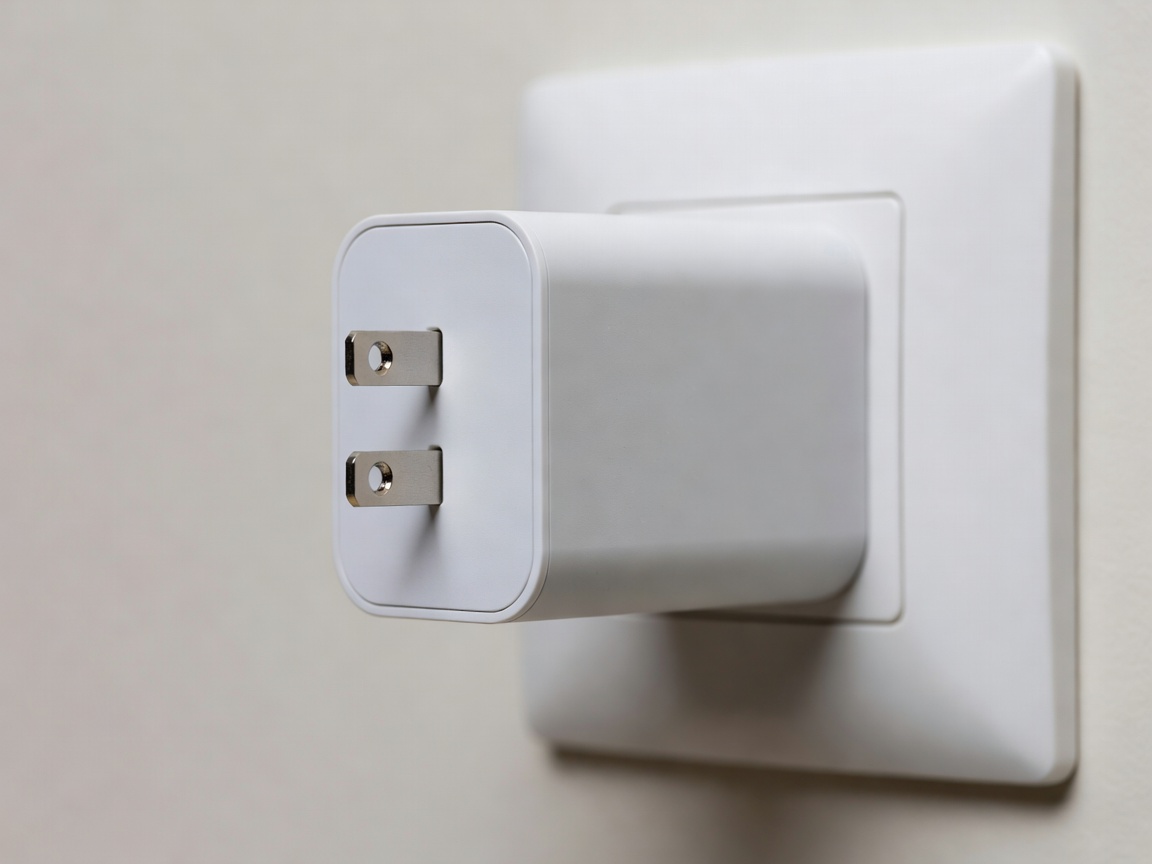
The Evolution of Wall Chargers
A few years ago, the charger that came in the box with your phone was the only one you ever needed. Today, with manufacturers omitting charging bricks to reduce electronic waste and packaging costs, the responsibility of choosing the right wall charger has shifted to the consumer. This choice is no longer straightforward. The market is saturated with terms like GaN, Power Delivery, PPS, and varying wattages ranging from 20W to over 140W.
The Gallium Nitride (GaN) Revolution
If there is one term to understand in modern charging, it is GaN (Gallium Nitride). For decades, chargers relied on silicon components to conduct electricity and manage heat. Silicon has physical limitations; to push more power safely, you need more space to dissipate the heat, resulting in massive laptop power bricks.
Gallium Nitride is a semiconductor material that conducts electrons much more efficiently than silicon. Because it wastes less energy as heat, components can be packed closer together. This allows a 65W GaN charger to be roughly the size of a traditional 20W silicon charger. For travelers or those with limited outlet space, GaN technology has been transformative, enabling multi-port chargers that easily fit into a small pocket.
Understanding USB-C Power Delivery (PD)
USB-C Power Delivery (PD) is an open standard that allows devices and chargers to negotiate the optimal power transfer. Instead of blindly pushing power, a PD-compatible charger communicates with the connected device (smartphone, tablet, laptop) to determine exactly how much voltage and current it can safely handle.
This handshake prevents your tiny smartphone from being fried by a 100W laptop charger, while also allowing that same 100W charger to drop its output to just 5W for wireless earbuds. Programmable Power Supply (PPS) is an advanced subset of this standard. It allows the charger to make micro-adjustments to voltage and current in real-time, drastically reducing the heat generated inside the smartphone battery and preserving its long-term health.
Choosing the Right Wattage
Buying the highest wattage charger available is not always the smartest financial move, as devices have a hard cap on what they can accept.
- 20W to 30W: Ideal for modern smartphones. Most flagship phones will cap their charging speeds between 20W and 27W. Buying a 100W charger strictly for a phone offers no speed advantage.
- 45W to 65W: The sweet spot for ultrabooks, tablets, and small laptops. A 65W charger can easily top up a premium tablet and standard 13-inch laptop at full speed.
- 100W to 140W+: Necessary for high-performance 15-inch and 16-inch laptops used for video editing or gaming. These are also ideal as multi-port hubs where power is divided among several hungry devices.
Multi-Port Chargers: The Power Split
Multi-port chargers are incredibly convenient, replacing three or four individual bricks with a single hub. However, it is crucial to understand how power distribution works. A charger advertised as "100W" with four ports does not output 100W per port simultaneously.
Instead, the 100W is the total power budget. If you plug a laptop into the first port, it might draw 65W. If you then plug a phone into the second port, the charger temporarily resets, recalculates the power budget, and might allocate 65W to the laptop and 20W to the phone. Always check the manufacturer's power distribution table before purchasing to ensure the split matches your daily workflow.
Safety Certifications and Build Quality
Never compromise on safety when dealing with mains electricity. Unbranded, unusually cheap chargers often lack basic thermal throttling or over-voltage protection, posing severe fire risks. Look for trusted third-party certifications depending on your region, such as UL (Underwriters Laboratories), CE, or FCC marks. A high-quality wall charger is an investment that protects the thousands of dollars worth of electronics you plug into it every single day.